
You can find the total monthly cost to run your shop by calculating overhead costs for a plumbing business, which involves adding all fixed expenses that exist regardless of how many jobs you complete. For more insights, check out How Can I Improve Customer Satisfaction and Retention for Plumbing Business?.
Who should calculate plumbing overhead costs

This page serves the owner-operator or the manager of a small plumbing firm who needs to set accurate service rates. You likely have your direct costs, such as copper pipe and hourly labor, accounted for in your job estimates, but you’re unsure how to price your services to cover the “hidden” costs of keeping the lights on. If you have been guessing your markup, you’re at risk of working long hours while losing money on every invoice. For more insights, check out How Can I Integrate Online Payment Options into a Plumbing Website?.
The most common mistake is failing to separate “field time” from “business time.” If you calculate your rate based only on the hours you spend under a sink, you ignore the time spent driving, invoicing, and sourcing parts. This oversight often costs firms 20% of their potential annual revenue. For more insights, check out Can You Start a Plumbing Business Without a License.
If your business is a sole proprietorship, you must account for your own salary as an expense, not just as “what is left over.” If you don’t pay yourself a market-rate wage, your profit margins are an illusion.
This guide assumes you’re currently using a standard accounting method, such as cash or accrual basis, to track your business finances. It’s for those who want to move from “guesstimating” their profit margins to building a sustainable, data-driven business model. If you’re looking for tax advice or legal structures, consult a qualified accountant, as those topics fall outside the scope of this operational guide. The goal here is to give you a clear, repeatable system to measure your monthly operational drain.
Factors that change your final number
The most significant factor affecting your result is your business structure. If you operate out of a home office, your rent or mortgage allocation will be much lower than a firm that maintains a commercial warehouse or showroom. You must decide what percentage of your home utility bills is truly business-related to get an accurate, defensible number.
Your equipment status matters significantly. If you own your plumbing vans and tools outright, your overhead is limited to maintenance, insurance, and property taxes. If you lease your fleet, your monthly payment is a fixed overhead cost that remains the same even if you have a slow month. People often mistakenly include fuel as an overhead cost; however, fuel is a variable cost tied directly to travel. Mislabeling variable costs as overhead leads to inflated pricing that can make you lose bids to competitors.
The final major factor is your insurance and licensing fees. These are often paid annually, but you must divide them by 12 to account for them in your monthly budget. If you fail to spread these out, you’ll face a “cash flow crunch” during the month when the bills are actually due.
Calculating your monthly operational costs

- List every fixed monthly bill, such as commercial rent, vehicle insurance, and software subscriptions.
- Add your annual costs, like state plumbing license renewals or business liability insurance, and divide each by 12 to find the monthly share.
- Calculate the depreciation of your heavy tools and vehicles by dividing the purchase price by their expected years of service, then by 12.
- Include fixed administrative salaries, such as a receptionist or bookkeeper, if you employ them regardless of job volume.
- Sum these figures to reach your total monthly overhead.
- Compare this sum against your average monthly revenue to see how much of your income is consumed before you start counting profit.
The judgment call that separates a professional from a hobbyist is the inclusion of your own “owner’s salary.” Many owners skip this step, but you must include a market-rate wage for your time as a core cost. If your business can’t cover your own salary plus these other costs, you’re currently subsidizing the business with your personal time rather than running a profitable company.
Overhead expense breakdown table
| Expense Category | How to Calculate | Typical Frequency | What to Watch For |
|---|---|---|---|
| Rent / Storage | Total monthly lease | Monthly | Lease increases |
| Vehicle Insurance | Annual premium / 12 | Annual | Policy changes |
| Software / CRM | Monthly subscription fee | Monthly | Unused licenses |
| Depreciation | Asset cost / lifespan / 12 | Yearly | Replacement needs |
| Licenses / Permits | Annual fee / 12 | Annual | Renewal deadlines |
Most operators treat these figures as static, but that’s a mistake that hides cash flow volatility. If your monthly overhead fluctuates by more than 5% due to seasonal storage or utility spikes, you must switch to a rolling three-month average to avoid underestimating your burn rate.
For software, audit your seat count every quarter. If you have more than two inactive user accounts, the cost of the subscription effectively doubles for those seats. You should cancel them immediately rather than waiting for the annual renewal date.
When calculating depreciation, don’t use the purchase price if you financed the equipment. Use the total cost of ownership, including interest payments, divided by the asset’s useful life. This provides a more accurate picture of your true monthly liability.
If you’re unsure whether an expense belongs here, use this decision rule: if the cost is required to keep the doors open regardless of sales volume, it’s overhead. If the cost only exists because you made a sale, classify it as a variable cost. Mislabeling these items leads to inflated margins that mask poor operational efficiency.
Excellence in financial tracking
Preparation and consistency
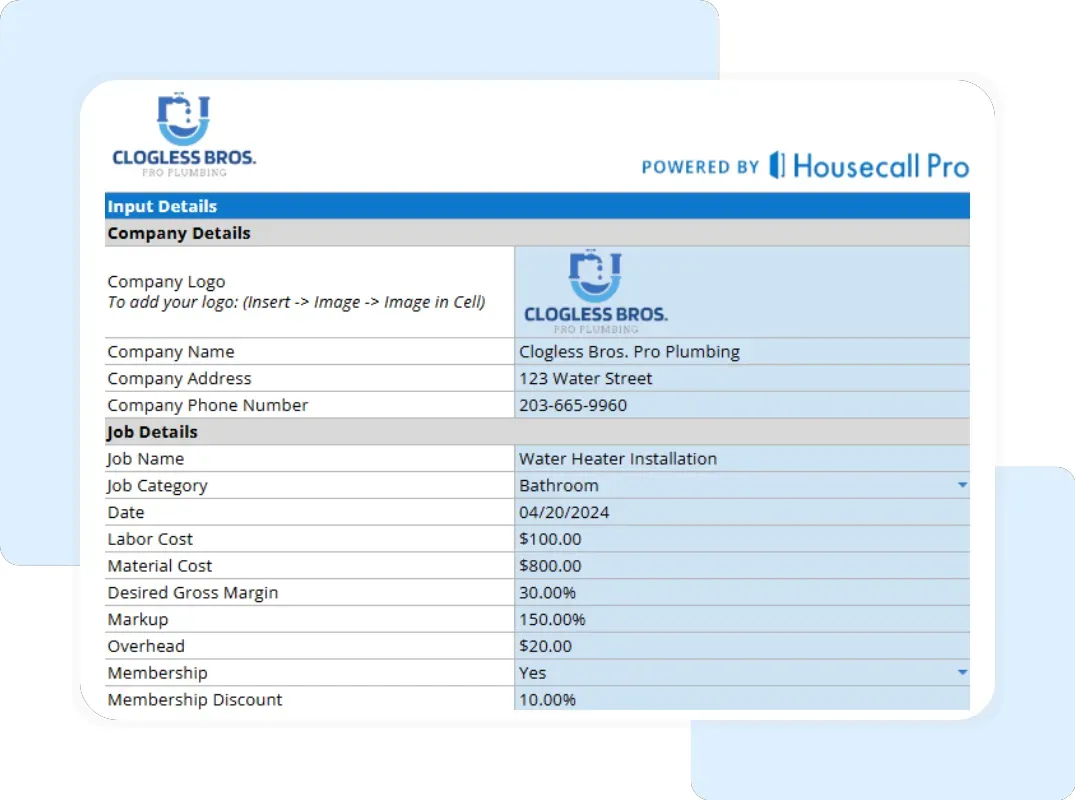
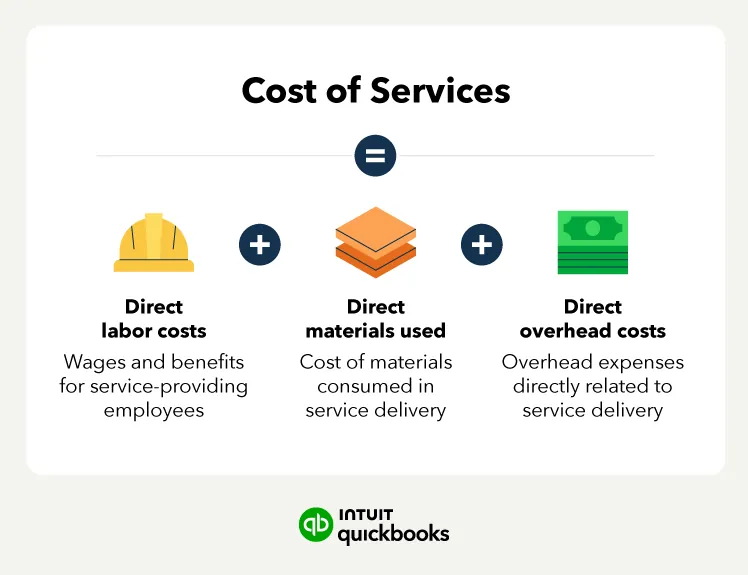
Experienced owners categorize their expenses into “Direct” and “Indirect” buckets before they ever look at a spreadsheet. Direct costs are the materials and labor for a specific plumbing job, while indirect costs—or overhead—are what you pay even if you sit idle for a week. The most successful owners review these numbers every 30 days to catch “subscription creep,” where unused software or unnecessary services slowly drain the bank account.
The trap of variable costs
A common mistake is treating variable costs as overhead. If you include the cost of solder or pipe fittings in your overhead, your hourly rate will be far too high, and you’ll lose jobs. You should bill materials separately or include them in the job estimate as a direct line item. The Small Business Administration provides resources on managing these finances to ensure you don’t mix up your operating costs with your job-specific costs. Always keep your overhead calculation clean so you can see if your business model is actually healthy.
Troubleshooting common errors
| What you notice | What it usually means | What to do first | How to stop it |
|---|---|---|---|
| Low profit margins | Overhead too high | Review fixed costs | Cut unused services |
| Cash flow gaps | Annual bills due | Spread costs monthly | Use a sinking fund |
| Losing every bid | Rates are too high | Check direct costs | Remove overhead markup |
| Bills go unpaid | Low revenue volume | Increase job volume | Raise hourly rates |
When your profit margins dip below 15%, you’re likely carrying “ghost” overhead. Scrutinize your recurring software subscriptions and insurance premiums first. If you find you’re paying for tools used less than once a month, cancel them immediately.
Cash flow gaps often stem from a failure to account for “lumpy” expenses like annual tax filings or insurance renewals. The mistake most owners make is treating these as surprises. Instead, calculate your total annual non-monthly bills and divide by twelve. Set that amount aside in a dedicated savings account every single month.
If you lose every competitive bid, your pricing structure is likely misaligned with the market. Check if you’re accidentally burying high overhead costs into project-specific quotes. If your direct costs are competitive but your total bid is 20% higher than peers, strip the overhead markup from your estimate.
Finally, if bills go unpaid, you’re likely suffering from a volume problem rather than a pricing one. If your utilization rate is below 60%, you can’t afford to raise rates yet. Focus on increasing your billable hours first. Once you hit 80% capacity, then raise your hourly rate to filter out low-margin work.
Legal and professional thresholds
You must adhere to the tax regulations set by your local government regarding what constitutes a business expense. For instance, the Internal Revenue Service (IRS) in the United States requires that expenses be both “ordinary and necessary” to be deductible. If you’re in the UK, you should consult the HM Revenue and Customs (HMRC) guidelines for specific rules on capital allowances for your plumbing tools.
Where the law requires a specific license for your trade, you must treat that fee as a mandatory overhead cost. If you operate in a region with strict environmental disposal laws, you may also have fees for waste disposal that must be accounted for. If you’re unsure about the tax status of a specific expense, always speak to a certified public accountant. They can ensure your overhead calculations are compliant with local tax laws, saving you from potential audits or penalties. Never attempt to guess your tax obligations, as failing to pay correct business taxes carries significant legal risk.
The real cost of doing business
Your overhead is essentially the “price of entry” for your business. It includes the cost of your office, your insurance, and the tools that stay in your van regardless of the work load. If your overhead is $2,000 per month, you have to earn that $2,000 before you have generated a single cent of profit.
The primary thing that moves this cost up is debt service. If you have financed high-end equipment or a luxury vehicle for the business, your overhead will be significantly higher than a peer who uses reliable, paid-off equipment. You can read your own “overhead ratio” by dividing your total overhead by your total gross revenue. A healthy ratio varies by region and trade, but most service businesses aim to keep this number below 20-25% of their total gross income. If your ratio is higher, you must either find ways to reduce your fixed monthly bills or increase your total job volume to spread the cost across more revenue.
Keeping your numbers accurate
After you calculate your overhead once, you must keep it updated. A common sign that your overhead needs attention is when you notice a steady decline in your net profit despite having a consistent number of jobs. This often happens because insurance premiums rise or subscription fees increase without you noticing.
Check your business bank statement at the end of each quarter. If you see a recurring charge for a service you no longer use, cancel it immediately. If your rent increases, adjust your monthly overhead figure in your master spreadsheet that same day. You don’t need to restart your entire calculation; just update the specific line item that changed. Maintaining this habit ensures your pricing stays competitive while protecting your profit margins.
The biggest mistake is failing to account for “subscription creep.” Many small business owners lose 5% to 8% of their annual net profit to software tools they stopped using months ago. To catch this, compare your current recurring charges against a list of active projects. If a tool doesn’t directly support a billable task, cut it.
Use this decision rule: if a cost is fixed, like rent or insurance, review it once every six months. If a cost is variable, like software seats or cloud storage, review it every 90 days. If your overhead has drifted by more than 3% from your initial estimate, you must raise your rates immediately to compensate.
When to hire help
If you find that your overhead is so high that you can’t price your services competitively, you’re likely in a situation where your business model needs a change. This often happens when you’re paying for commercial space you don’t use or carrying debt on equipment that isn’t generating enough jobs to pay for itself.
In these cases, the alternative is to downsize your fixed costs, such as moving to a smaller shop or selling unused equipment. If your business has grown to a size where you have multiple employees and a large fleet, your overhead calculations will become complex enough that you should hire a professional accountant.
A pro can help you identify tax-saving opportunities and ensure your overhead is allocated correctly across your different service lines. Don’t try to manage the books yourself once your business reaches a scale where a single accounting error could lead to significant financial loss.
The decision rule is simple: if your monthly billable hours are spent more on administrative bookkeeping than on client-facing revenue generation, you have reached the tipping point. At this stage, the cost of an accountant is almost always lower than the opportunity cost of your own time.
Many owners make the mistake of waiting until tax season to seek help. This delay costs them the chance to implement mid-year adjustments that could have lowered their quarterly tax liability. If you can’t produce a real-time profit and loss statement for each service line, you’re flying blind. Hire help before your growth outpaces your ability to track it.
Frequently asked questions
How long does it take to calculate overhead costs?
Calculating your overhead usually takes about 60 to 90 minutes if you have all your bank statements and bills organized. You simply need to gather your fixed costs from the last 12 months, sum them up, and divide by 12 to establish your baseline monthly average.
Is it safe to include my personal car in business overhead?
It’s generally not safe or legal to include personal expenses in your business overhead unless you have a clear, documented business-use percentage. You must consult your local tax authority’s guidelines on vehicle deductions to ensure you aren’t misreporting personal costs as business expenses, which can lead to audits.
What happens if I forget to include depreciation?
If you forget to include depreciation, you’ll underestimate your true overhead costs and likely underprice your services. This means you won’t have enough cash saved to replace your tools or vehicles when they eventually break, forcing you to take on expensive debt to stay in business.
Does it matter if I pay my overhead annually?
It matters greatly because paying annually can create a massive cash flow shortage in the month the bill is due. You should always divide the total annual cost by 12 and set that amount aside in a separate business savings account each month to ensure the money is ready.
How often should I recalculate my overhead?
You should recalculate your overhead at least once every six months or whenever you make a major change to your business. Major changes include buying new vehicles, moving to a new office, or hiring new staff, as these events drastically shift your fixed monthly expenses and your break-even point.
Can I include fuel in my plumbing business overhead?
You shouldn’t include fuel in your overhead because it’s a variable cost that fluctuates based on how many jobs you perform. Overhead costs must be fixed, meaning they stay the same regardless of your job volume; instead, track fuel as a direct expense for each job.
Conclusion
Start by gathering every recurring receipt from the last year to establish your baseline. You’ll know you have done this correctly when you can look at your monthly bank statement and see your overhead costs perfectly aligned with your projections. If you find that your actual costs are consistently higher than your estimates, stop and consult an accountant immediately to prevent a total business failure.