
You reach your target profit by calculating your total overhead, adding the desired labor margin, and applying a consistent markup to all materials. Moving away from guesswork toward a structured, math-based formula that covers your business costs before you ever start a repair is the key to pricing plumbing jobs for profit. For more insights, check out How to Become a Licensed Plumber (2026).
Your final price will change based on your local market rates, your specific business overhead, and the complexity of the materials required for each individual job. For more insights, check out Social Media Marketing Strategies For The Plumbing Business.
Targeting profitable plumbing jobs
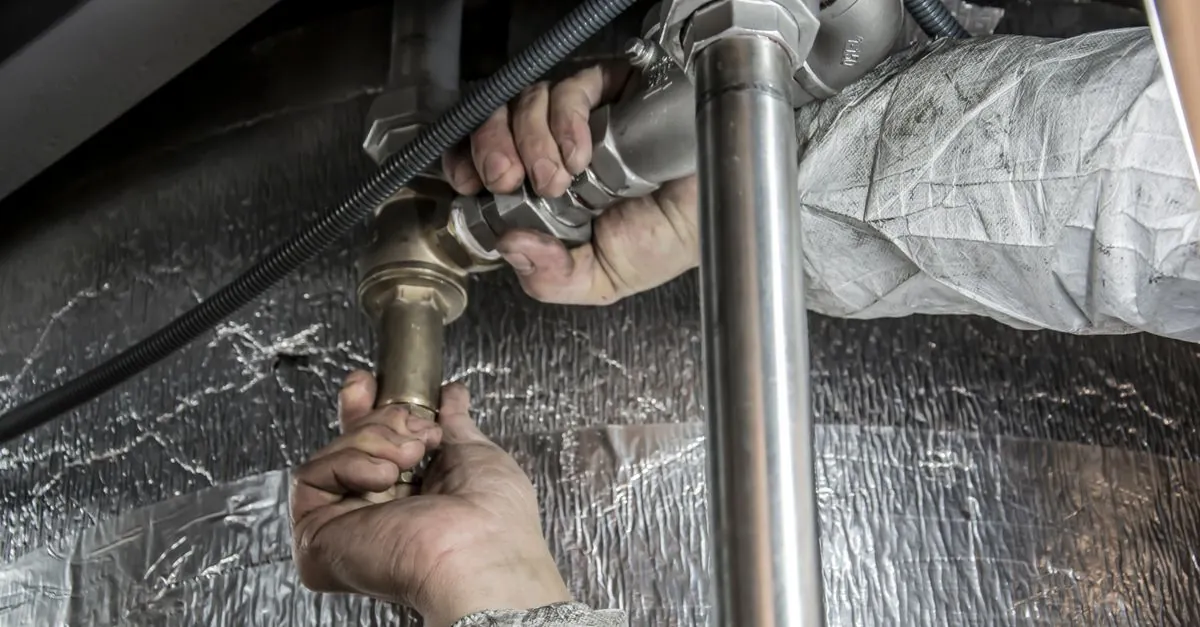
This guide is for independent plumbers and small business owners who are currently charging by “gut feeling” or copying their competitors’ prices without knowing if those prices actually cover their bills. If you’re already using a professional flat-rate pricing software that automatically accounts for your local tax, fuel costs, and insurance premiums, this article may be too basic for your needs. For more insights, check out What is The Best Business Structure for a Plumbing Business?.
This page serves the plumber who has a physical trade license but lacks a formal accounting process. You likely know how to fix a leak in under an hour, but you might not know how much that hour cost you in truck maintenance, tool depreciation, and administrative time. We assume that you have access to your bank statements from the last 12 months and that you’re willing to spend one afternoon calculating your true business expenses. If you’re looking for tax advice or legal structures for your company, please consult a certified public accountant, as this article focuses strictly on operational pricing strategies.
Factors that influence your bottom line
Your success depends on your ability to track and categorize costs accurately. Each job you take must cover its own direct expenses while contributing a set percentage toward your fixed annual obligations.
- Fixed Overhead: This includes your rent, insurance, vehicle payments, and recurring software subscriptions. You must divide this total by your billable hours to see how much every hour of labor must earn just to keep the lights on.
- Labor Burden: Many people forget to include the cost of their own time, including payroll taxes and workers’ compensation. If you don’t pay yourself a fair market wage, your business will fail when you eventually need to hire help.
- Material Markup: This is the most common area where profit is lost. You should never charge the exact price you paid at the supply house; you must add a percentage to cover the time spent sourcing, picking up, and managing those materials.
- Market Positioning: Your location dictates what customers are willing to pay. You can check the Occupational Employment and Wage Statistics from the Bureau of Labor Statistics to see the median hourly earnings for plumbers in your specific metropolitan area.
Calculating your service price
Follow these steps to build a price that protects your margins. Don’t skip the math, as a single error in your overhead calculation can turn a busy month into a net loss.
- Calculate annual overhead: Add up your rent, insurance, vehicle fuel, tools, and marketing costs for the last year.
- Determine billable hours: Estimate how many hours you actually spend on jobs, not including travel or administrative tasks, for the year.
- Set your hourly rate: Divide your total overhead by your billable hours, then add your desired hourly wage and profit margin.
- Audit material costs: Track every item you purchase for a job and add a minimum 20% markup to account for delivery and storage.
- Create a flat-rate book: List your most common jobs—like sink installs or drain clearing—and assign a fixed price based on your hourly rate plus materials.
- Review every quarter: Check your actual profit against your estimates; if you aren’t hitting your target, increase your markup by 5% until the numbers align.
- Verify the total: Ensure the final quote includes the cost of any specialized equipment rentals needed for the specific site.
The judgement call that separates a profitable business from a hobby is the decision to walk away from low-margin work. If a customer demands a price that doesn’t cover your calculated overhead and labor, you must be prepared to decline the job.
Comparison of pricing methods
| Strategy | When to use it | Effort required | Potential risk |
|---|---|---|---|
| Time and materials | Large, unknown projects | Low | Low profit margin |
| Flat rate | Common, repeatable tasks | High | Underestimating time |
| Value-based | Emergency, high-skill work | Medium | Customer pushback |
| Tiered pricing | Multiple service options | High | Complexity for client |
| Subscription | Routine maintenance plans | Medium | Long-term commitment |
Choose time and materials when the project scope is fluid. If you can’t define the final deliverable within a 10% margin of error, avoid flat rates. Otherwise, you risk absorbing the cost of “scope creep” that drains your hourly rate.
Use flat rates only for tasks you have completed at least five times previously. If you’re new to the task, you’ll likely underestimate the labor by 30% or more. This mistake turns a profitable job into a loss once you account for administrative overhead.
Value-based pricing thrives when the client’s pain is acute and the solution is rare. If the client asks “how many hours will this take,” they aren’t a candidate for value-based pricing. Switch to time and materials immediately to preserve your hourly integrity.
Tiered pricing works best when you offer a “good, better, best” structure. Keep the options limited to three. If you provide more than three tiers, the client faces decision paralysis and often chooses nothing at all.
Finally, subscriptions require a strict service level agreement. If you don’t cap the monthly hours, your most profitable clients will eventually become your biggest losses. Always include a “fair use” clause to protect your time.
Professional standards for growth
Accurate job costing
Experienced owners track every minute spent on a job, including the time spent driving to the supply house. Beginners often forget to bill for travel, which effectively lowers their hourly rate every time they leave the shop. You should treat every second of your workday as a billable asset; if you aren’t charging for it, your profit is disappearing into the time you spend on the road.
Managing material margins
Successful plumbers never sell materials at cost. They apply a consistent multiplier to every item, ensuring that the time spent managing inventory is paid for by the job itself. If you buy a part for $50, a 30% markup is the minimum standard to cover your overhead, though many professionals use higher tiers for specialized or hard-to-find components.
Common pricing errors
| What you notice | What it usually means | What to do first | How to stop it |
|---|---|---|---|
| Busy but broke | Low profit margins | Audit your overhead | Raise your rates |
| Losing big bids | Prices too high | Review your labor | Optimize your speed |
| Winning every bid | Prices too low | Increase your markup | Test higher prices |
| High material waste | Poor inventory tracking | Limit extra trips | Better job planning |
| Unpaid travel time | Missing travel fees | Add trip charges | Standardize fees |
The most common mistake is failing to account for “hidden” labor, such as the time spent loading your truck or driving to the supply house. If you don’t bill for these hours, your effective hourly rate drops by 20% or more. You can tell if this is your problem by comparing your total hours worked against your total hours billed. If the gap exceeds ten percent, you’re effectively working for free.
Another frequent error is underestimating the cost of specialized equipment. Many professionals charge only for their time, ignoring the depreciation of their tools or the cost of fuel. If your equipment costs more than $5,000 to replace, add a flat “tool usage fee” to every invoice.
Finally, don’t fall into the trap of matching a competitor’s price without knowing their overhead. If they operate out of a home office while you maintain a warehouse, their floor is your ceiling. If you can’t match their price while maintaining a 15% net profit, walk away from the bid. You’re better off losing the job than paying to do it.
Regulatory and legal considerations
Every state has specific requirements regarding how you must disclose pricing to a client. In many regions, you’re legally required to provide a written estimate before starting any work that exceeds a certain dollar amount. Check your state’s contractor licensing board website to find the exact threshold for your area, as failing to provide a written contract can leave you without legal recourse if a customer refuses to pay.
The most common mistake is assuming a verbal agreement holds weight in small claims court. In most jurisdictions, an unwritten agreement for work over $500 is unenforceable. If the project scope shifts mid-job, you must issue a written change order immediately. Failing to document these additions often results in a total loss of payment for the extra labor and materials.
Additionally, if your job requires a permit, you must include the cost of the permit and the inspection time in your quote. Never perform work that requires a permit without securing it first, as this can void your liability insurance. If you’re unsure about local permit requirements, contact your municipal building department to get the current fee schedule.
Use this simple decision rule: If the project involves structural changes, electrical wiring, or plumbing modifications, assume a permit is mandatory. If you’re working in a historic district, check for supplemental zoning overlays. These zones often carry stricter aesthetic requirements that can inflate your material costs by 20% or more. Always confirm these details before submitting your final bid to protect your profit margins.
Hidden business expenses
Pricing for profit means understanding that your “take-home pay” isn’t your profit. You must account for the cost of maintaining your tools, which wear out and require replacement every few years. Additionally, you need to factor in your marketing costs, such as website hosting or local advertising, which keep your phone ringing. If you don’t include these in your job pricing, you’re essentially paying out of pocket to do the work.
The cost of your insurance and licensing is also a fixed expense that must be spread across every job you perform. A good rule of thumb is to look at your total business expenses from the previous tax year and add 10% for inflation. Divide this by your expected number of jobs for the coming year to see exactly how much extra money you need to add to every single invoice to stay in the green.
Sustaining long-term success
After a job is finished, you should review your actual time and material usage against your initial estimate. This data is your most valuable asset for future quoting. If you find that a specific job consistently takes longer than expected, adjust your flat-rate book to match reality. Keep a digital log of these adjustments so your pricing remains accurate as your speed and equipment improve.
If you notice your profit margins slipping, check your supply house invoices first. Prices for copper, PEX, and fittings change frequently, and you must update your price book at least twice a year to keep pace with inflation. If you aren’t seeing the profit you expected, it’s rarely because you’re doing bad work; it’s almost always because your data—your costs and your time—no longer match your current business reality.
When to seek other solutions
If you find that your pricing is consistently higher than the market average and you’re still struggling to make a profit, you may have a fundamental inefficiency in your business model. In this case, you shouldn’t simply lower your prices. Doing so often triggers a race to the bottom that destroys your margins. Instead, consider hiring a business consultant who specializes in the trades to help you audit your workflow.
A common mistake is assuming your labor costs are the problem when the real culprit is “leakage.” This occurs when unbilled materials or non-billable travel time eat your profit. If your overhead exceeds 25% of your gross revenue, you’re likely over-leveraged on equipment or office space. A consultant will identify whether your issue is poor job costing or simply an inability to capture every billable hour.
If you’re a solo operator and the administrative side of pricing is consistently keeping you from doing the actual plumbing work, consider outsourcing your bookkeeping or using automated dispatch software. Trying to do complex accounting while also managing a full schedule of repairs often leads to burnout and errors in your pricing. These errors usually manifest as missed line items on invoices, costing the average solo shop roughly $500 to $1,000 per month in lost revenue.
When the business becomes too large to manage on a spreadsheet, it’s time to move to a specialized trade management platform. The decision rule is simple: if you spend more than four hours a week manually entering data or chasing payments, the cost of a software subscription is lower than the cost of your time. If you’re struggling to track inventory across three or more active job sites, a manual system is no longer viable. Moving to a centralized platform ensures that your pricing remains consistent across every technician. This shift protects your margins as you scale, preventing the common trap of growing your revenue while simultaneously shrinking your net profit.
Frequently asked questions
How much markup should I add to plumbing materials?
You should add a minimum of 20% to 30% to the cost of all materials to ensure you cover your time spent sourcing and transporting parts. This percentage can increase for specialized items that are difficult to locate or require longer lead times to secure for your customers.
Is it better to use hourly or flat-rate pricing?
Flat-rate pricing is generally better for your profit margins because it rewards your efficiency and expertise rather than just your time. When you charge by the hour, a more skilled plumber who works faster actually makes less money for the same result, which penalizes your professional growth.
How do I calculate my true hourly overhead?
Divide your total annual business expenses—including rent, insurance, vehicle costs, and taxes—by your total number of billable hours per year. This result is your “break-even” hourly cost, and you must charge more than this number to generate any actual profit from your labor.
Why do I keep losing money on big jobs?
You’re likely underestimating your “labor burden,” which includes payroll taxes, insurance, and the non-billable time spent on administration and travel. Ensure every quote includes a calculated buffer for these hidden costs, and always verify that your material markups are applied to the final retail price, not your wholesale cost.
Does it matter if I change my prices often?
It matters that your prices remain consistent for the customers you serve, but you should adjust your internal price book as your costs change. You can update your pricing structure at the start of each quarter to ensure you’re accounting for inflation and the rising cost of supplies.
What is the biggest mistake when pricing plumbing work?
The biggest mistake is failing to include your own salary and the cost of your time as a legitimate business expense. Many plumbers view their profit as whatever is left over after bills are paid, but your labor is a cost that must be covered by the job price itself.
Conclusion
Start by calculating your total business expenses from the last twelve months to establish your true break-even point. You’ll know this process is working when your bank account balance grows steadily alongside your workload. If you find your costs are consistently exceeding your revenue because your markup is too low, stop taking new jobs and contact a professional business accountant to review your records.